
Service & engines
Your Garmin Kraken is only as good as its calibration
Ten minutes in open water is the difference between a trolling motor that holds the spot and one that walks you off it.

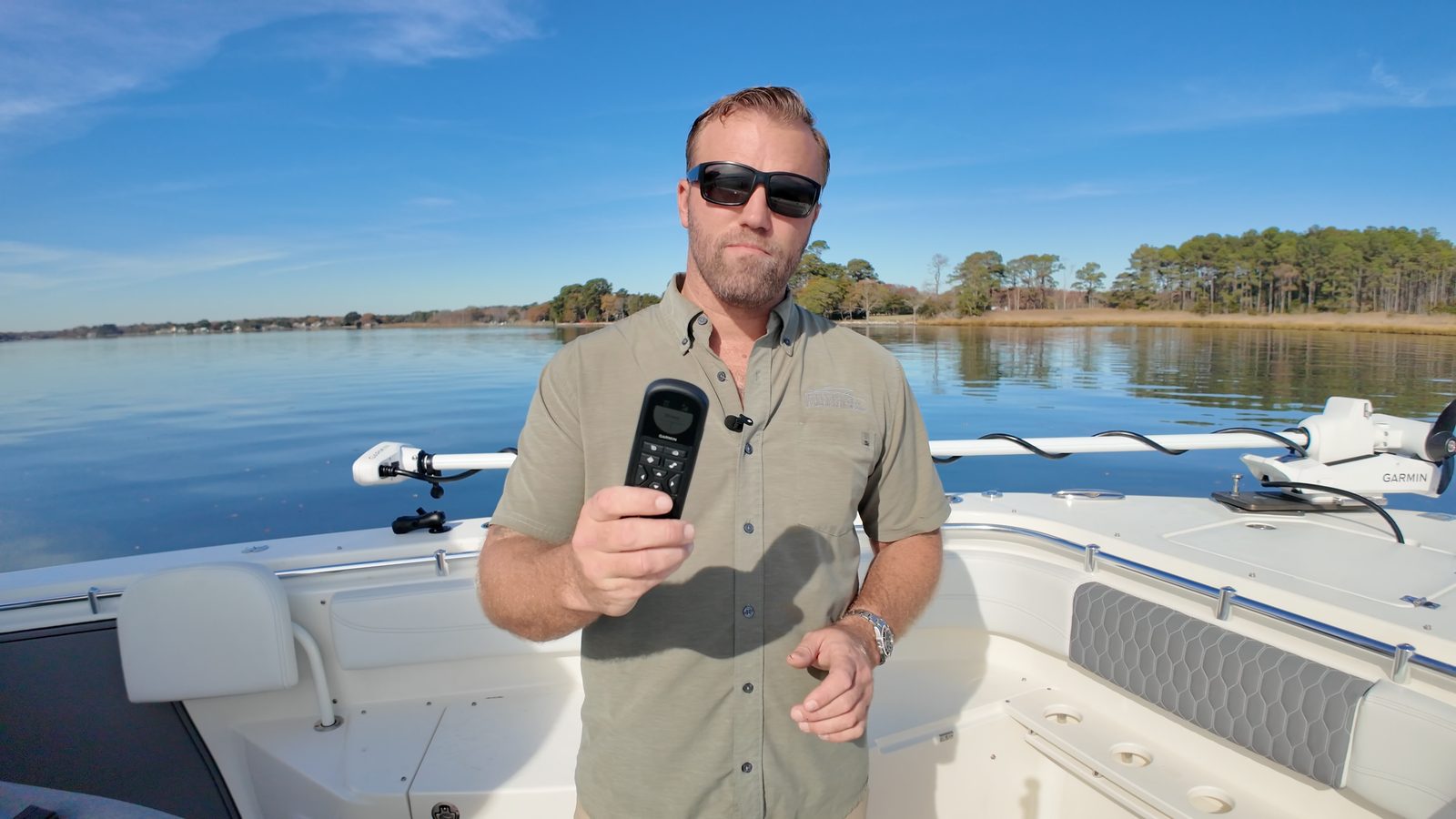
The complaint is always some version of the same thing. The motor went on last week, the owner hit anchor lock over a piece of structure, and the boat slid off it. Or it held, but it circled the spot like a dog settling down.
Nothing is wrong with the motor. It was never told where the front of the boat is.
Watch it done
The whole calibration on the water, from the remote and from the chartplotter.
What the motor does not know yet
Anchor lock and heading hold both depend on two things: where the boat is, which GPS gives it, and which way the boat is facing, which comes from a compass in the motor. That compass ships uncalibrated, because every boat puts different metal around it.
The second thing it cannot know is where straight ahead is. Most trolling motors are mounted off to one side of the bow. Until you set the bow offset, the motor's idea of forward is wherever it happened to be bolted down.
Where you do it matters
Do it in open, calm water with room to turn. Not at the dock, and not next to a bridge. A steel bulkhead or a bridge full of rebar bends the compass reading while the motor is learning, and it will carry that mistake with it until you calibrate again.
The two steps
- Compass. Start the compass calibration from the remote and turn the boat through a slow, steady circle until it reads 100 percent. Rushing it is the most common way to get a poor result.
- Bow offset. Point the motor straight down the keel line and save it.
If you run a Garmin chartplotter, pair the motor to it. You get the same settings on a bigger screen, the motor shows on your chart, and you can drop anchor lock on a waypoint from the helm.
When to do it again
Any time the motor moves: a new boat, a new mount, or the same mount shifted a few inches. Also any time you add something magnetic near the bow. A speaker is enough.
If it is holding well, leave it alone. This is not an every-spring job.
If it still wanders
Redo it with more open water around you, then look at the anchor lock gain. Too high and it overshoots and swings back. Too low and it is slow to answer wind and current. Past that, it is usually power or placement, and that is something we would rather look at than guess at over the phone.