
Service & engines
What eats a timing belt is usually not the belt
Black dust under the cowling is the belt telling you in advance. The part to look at is the one it runs over.

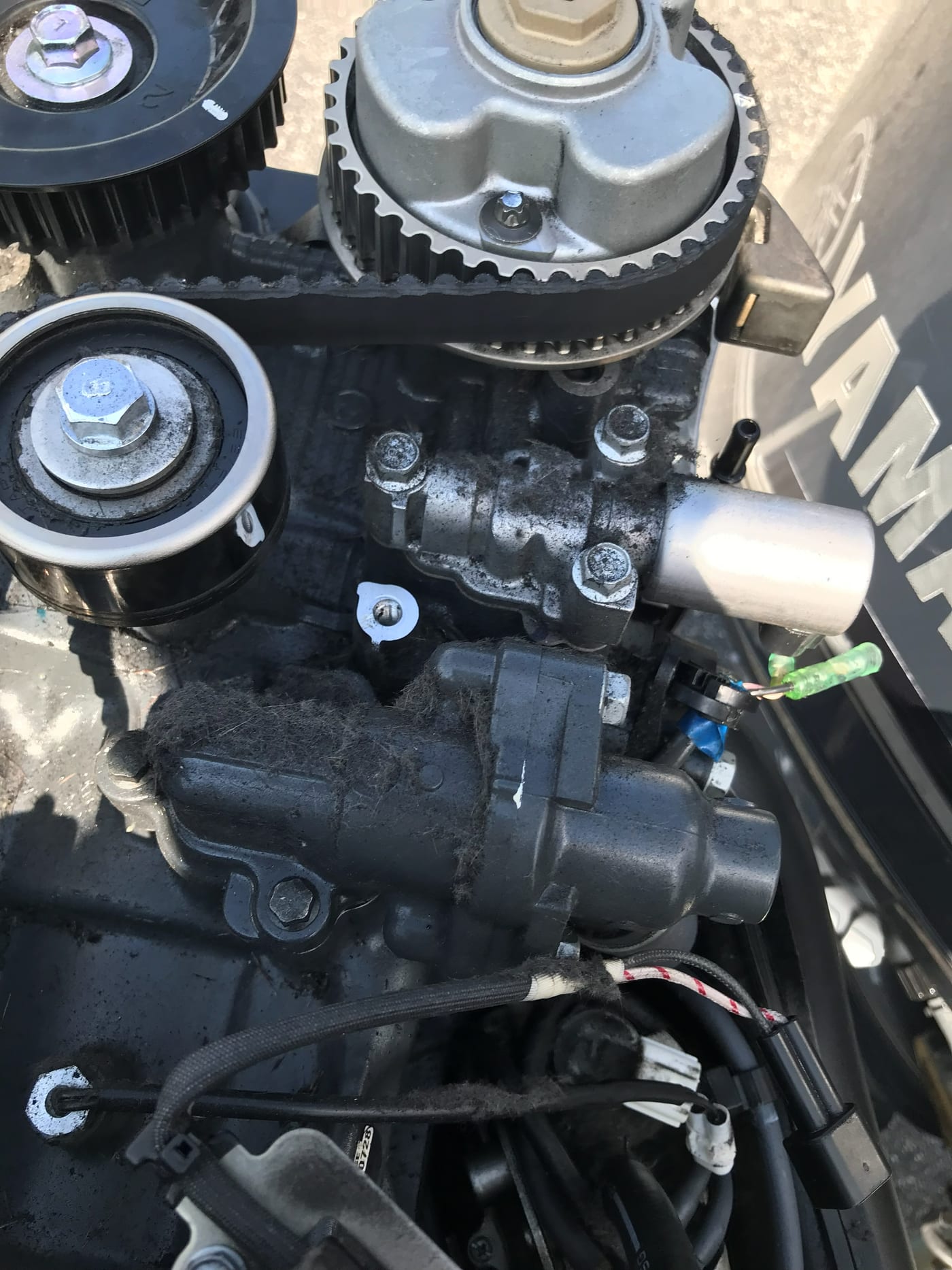
Here is a check any owner can do with the cowling off. Run a finger along the top of the powerhead. If it comes away black and fine, like graphite, that is rubber, and it came off the timing belt.
That is not a reason to panic. It is a reason not to leave it for next season. A belt that is shedding is a belt telling you in advance.
Why it matters on a four-stroke
The timing belt keeps the camshafts turning in step with the crankshaft. The valves open and close because that belt says so, and the pistons come up to meet them on the same schedule for the same reason.
When a belt breaks, that agreement ends at once. The crank keeps turning, the cams stop, and the pistons arrive where open valves are standing. That is bent valves and a powerhead apart — an engine repair, not a service.
The part that eats the belt
A belt in good order, running over pulleys that turn freely, lasts a long time. What wears one out early is something in its path that has stopped turning the way it should. Two parts do most of it.
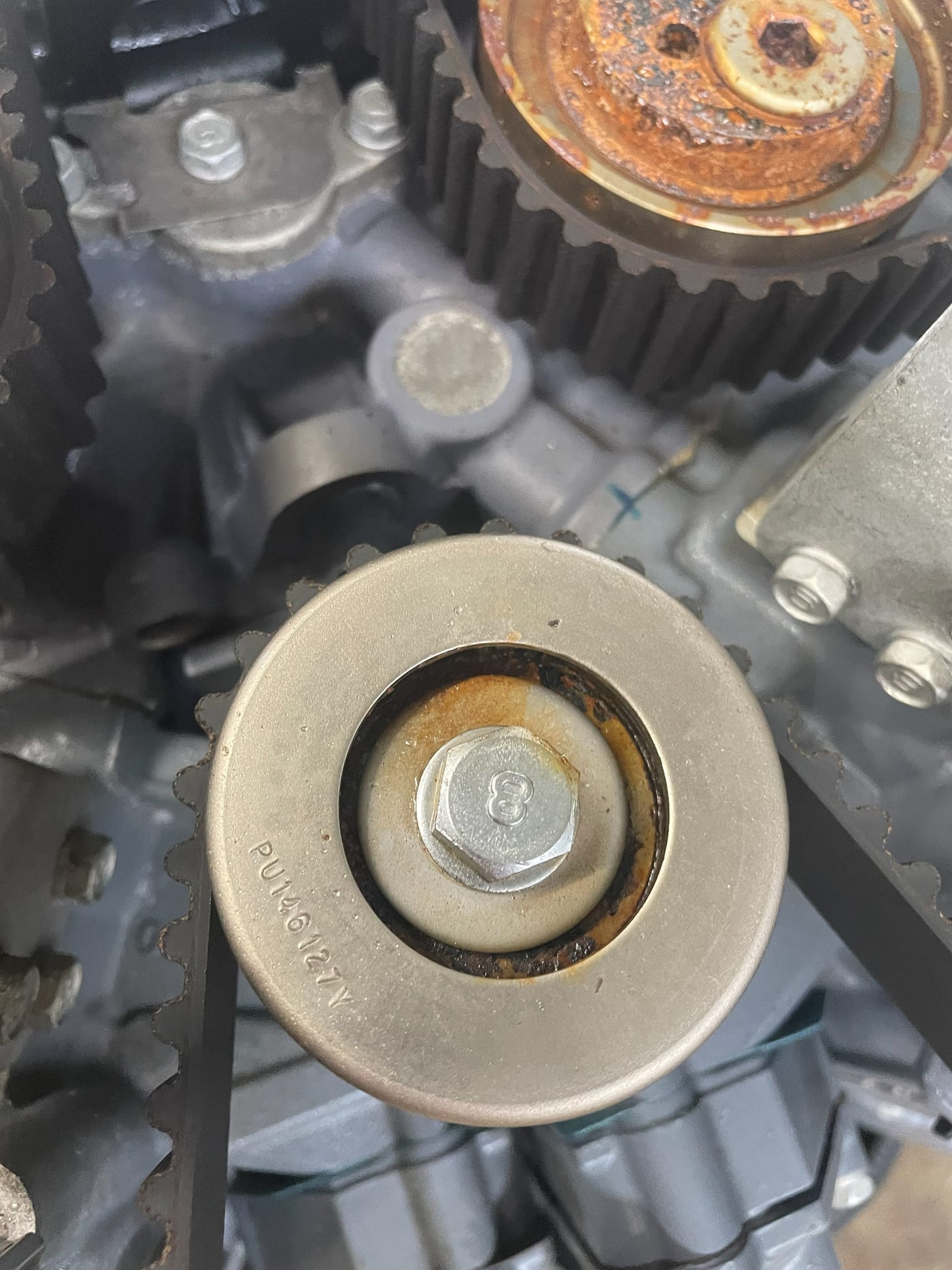
The idler pulley. When its grease dries out it still turns if you push it hard. That is how it passes a quick look, and it is how it drags on the belt every time the engine runs.
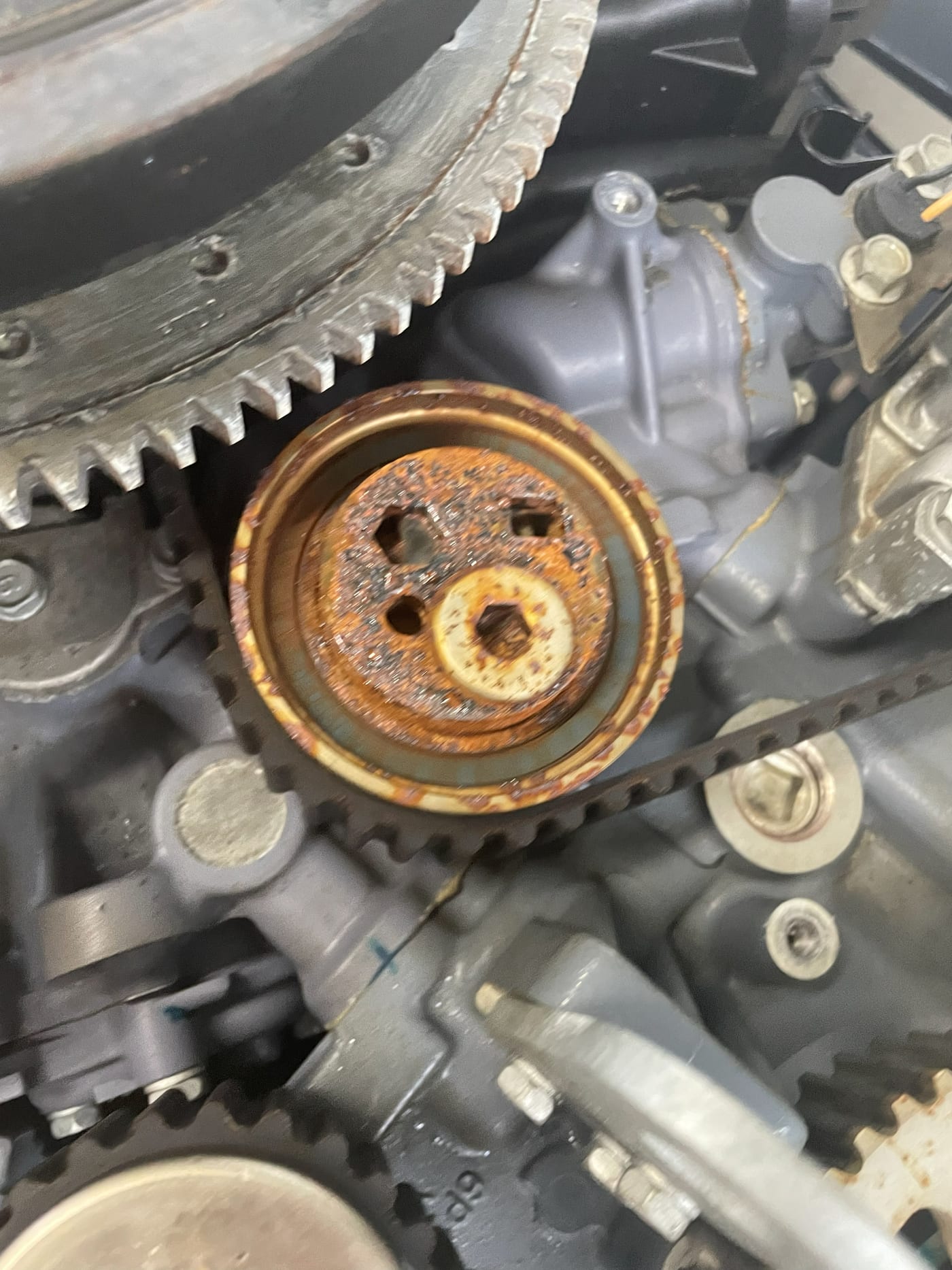
The tensioner. Once it rusts at the pivot it cannot hold the belt at an even tension any more, and a belt that is tight in one place and slack in another is a belt that sheds.
So an inspection here means more than glancing at the belt. We turn every idler and the tensioner by hand and feel for roughness, dried grease and a bearing that has picked up rust. Replacing a belt and leaving the thing that ate it in place buys a couple of seasons, not ten.
When it gets checked anyway
The timing belt is inspected every five years as scheduled service, whether there is dust or not. We also look any time the cowling is off in front of us, which, on a boat that comes to us for its winterization, means every fall. It costs nothing to run a finger across the powerhead.
If it is not the belt
- Flaking paint, a wire loom chafing on a bracket, or a hose rubbing where it should not can leave dust too.
- Those look different up close: flakes and strands, not an even powder.
- It is still something rubbing that should not be, and worth finding either way.