
Service & engines
Why we pull the propeller on every winterization
A few minutes with the prop off is the difference between a seal in November and a lower unit in June.

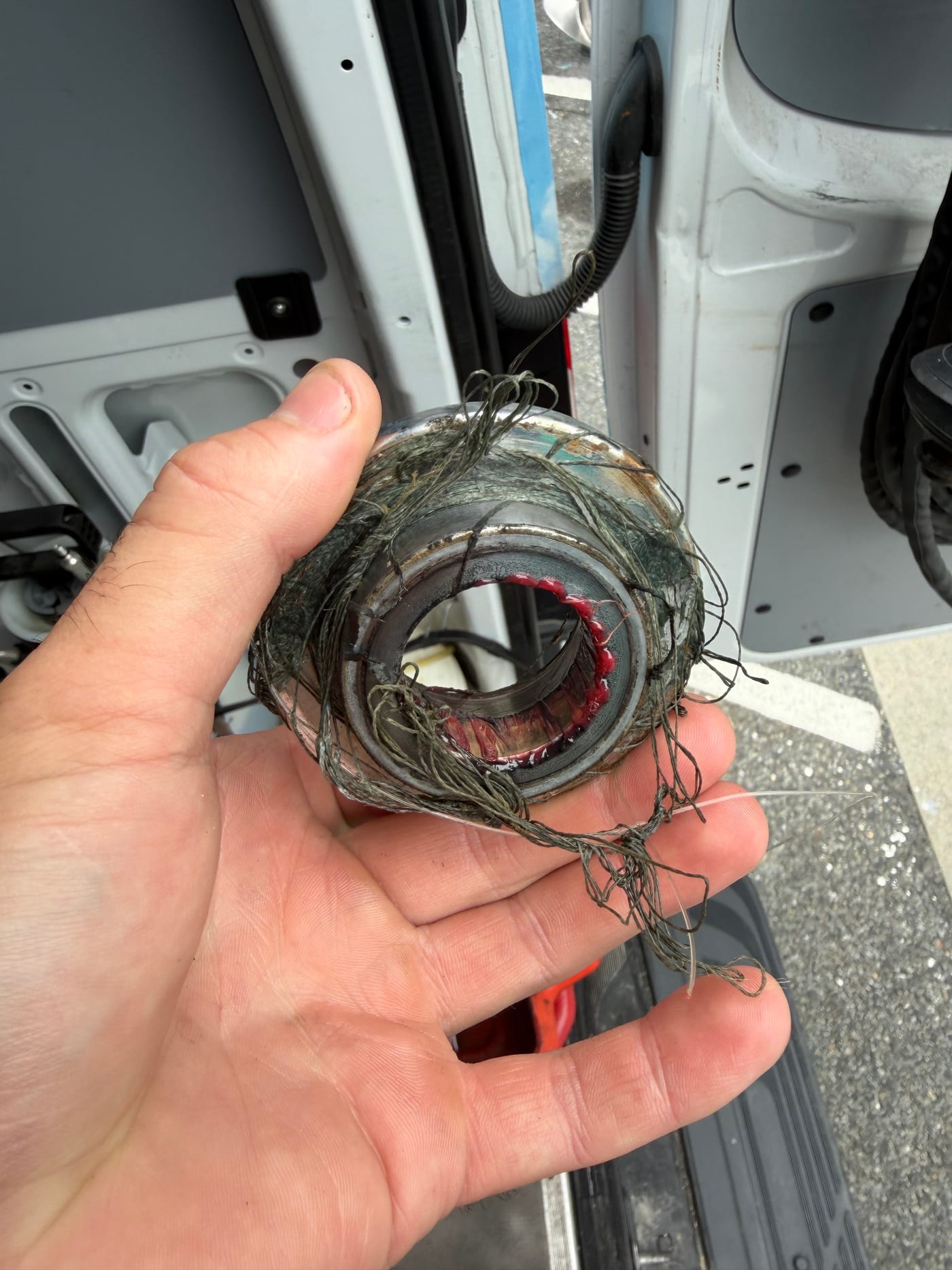
Every boat that comes through our yard for its winterization has its propeller pulled. It takes a few minutes, and owners sometimes ask why we bother on an engine that ran perfectly all summer. This is the answer.
What we are looking for
Monofilament. A boat that fishes, or just runs past people who do, picks up line. It wraps around the shaft behind the propeller, packs in tight against the seal, and spins there for hours. It cuts a groove in that seal the way a lathe would.
The owner never saw it go on, and with the prop fitted nobody can see it at all. The only way to know is to take the propeller off and look.
Why a cut seal matters
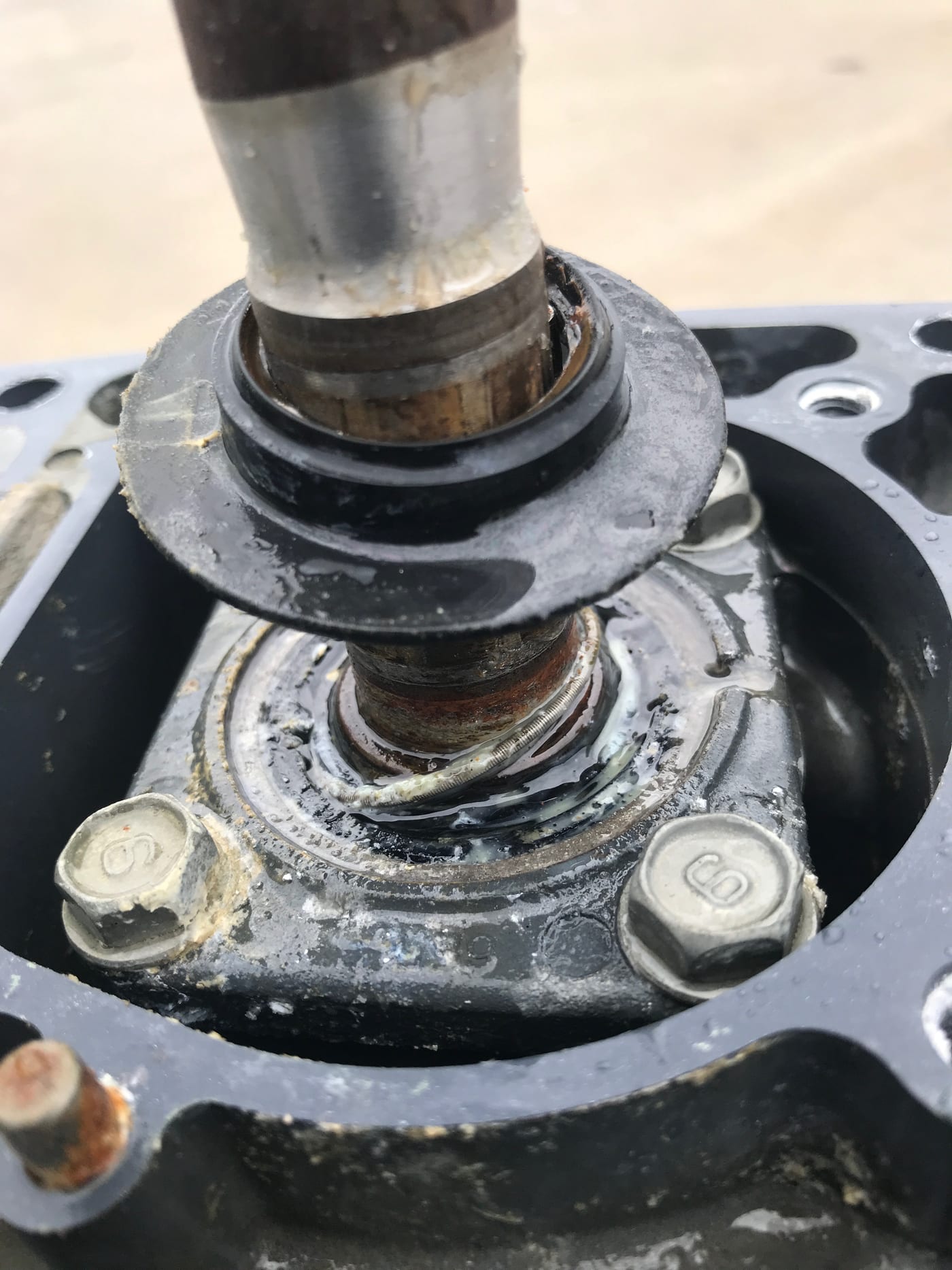
A Yamaha lower unit has three seals that keep the water out: the prop shaft seal at the back, the driveshaft seal at the top of the gearcase, and the shift shaft seal. Once any of them lets water in, the gear oil and the water get spun together at engine speed. They emulsify — the way oil and vinegar do in a jar you shake hard.
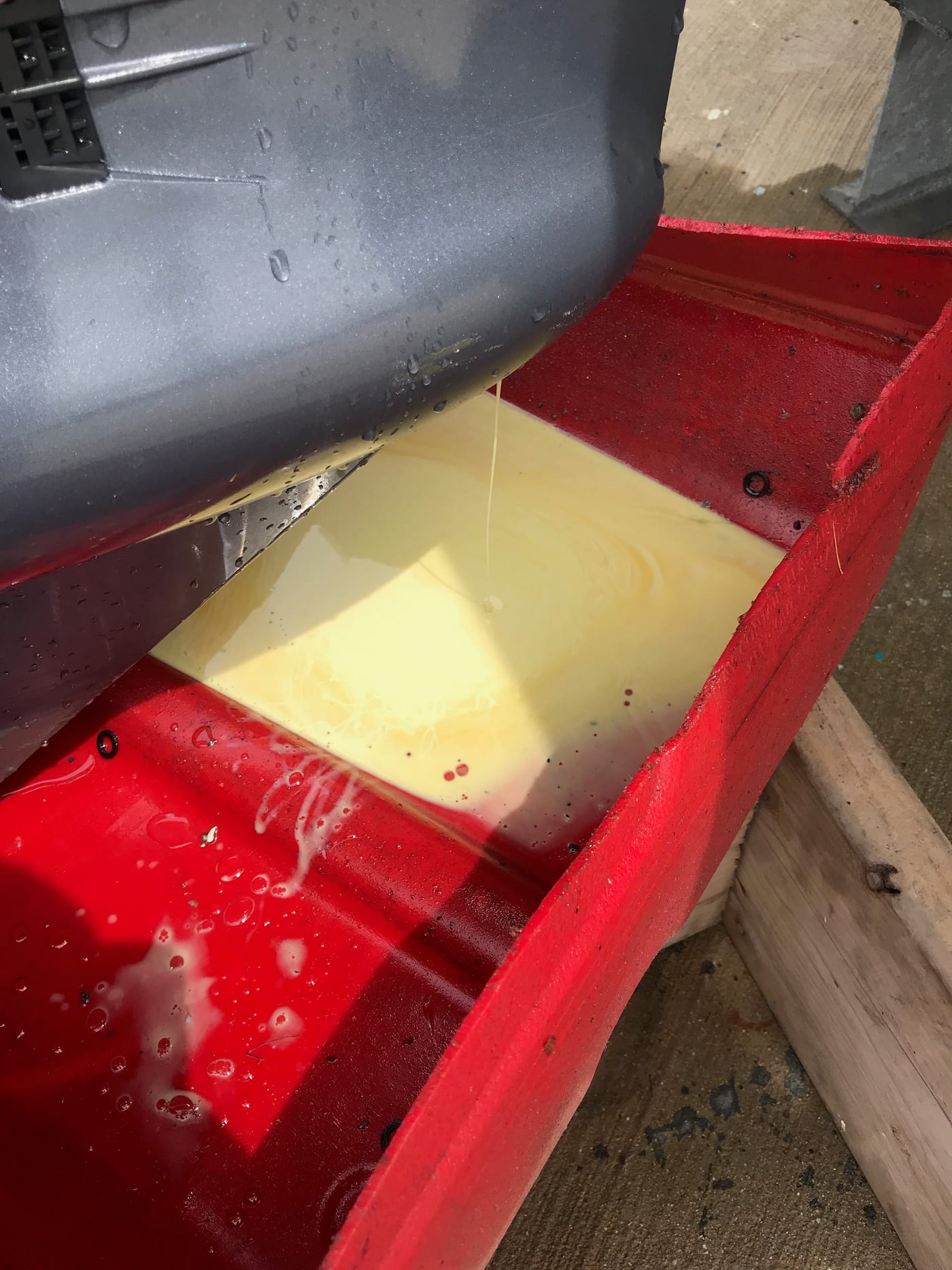
That emulsion is the problem. Gear oil does its job by staying between two pieces of hard steel under a great deal of pressure, and emulsified oil gives way instead. The gears and the bearings start touching, run hot and wear. Between trips, the water that is still in there rusts the bearing races.
The difference it makes
A cut seal found in the fall is seals and gaskets: a service, done on a bench with the parts on the shelf. The same seal found after another season of running is a different conversation — gears, bearings, sometimes most of a lower unit.
A few minutes with the prop off is the difference between replacing a seal in November and replacing a lower unit in June.
What we do when we find it
The lower unit comes off the boat and onto the bench. It is drained and opened, and the gears, bearings and shafts are looked at properly, because the point is to know whether the water has already cost you something.
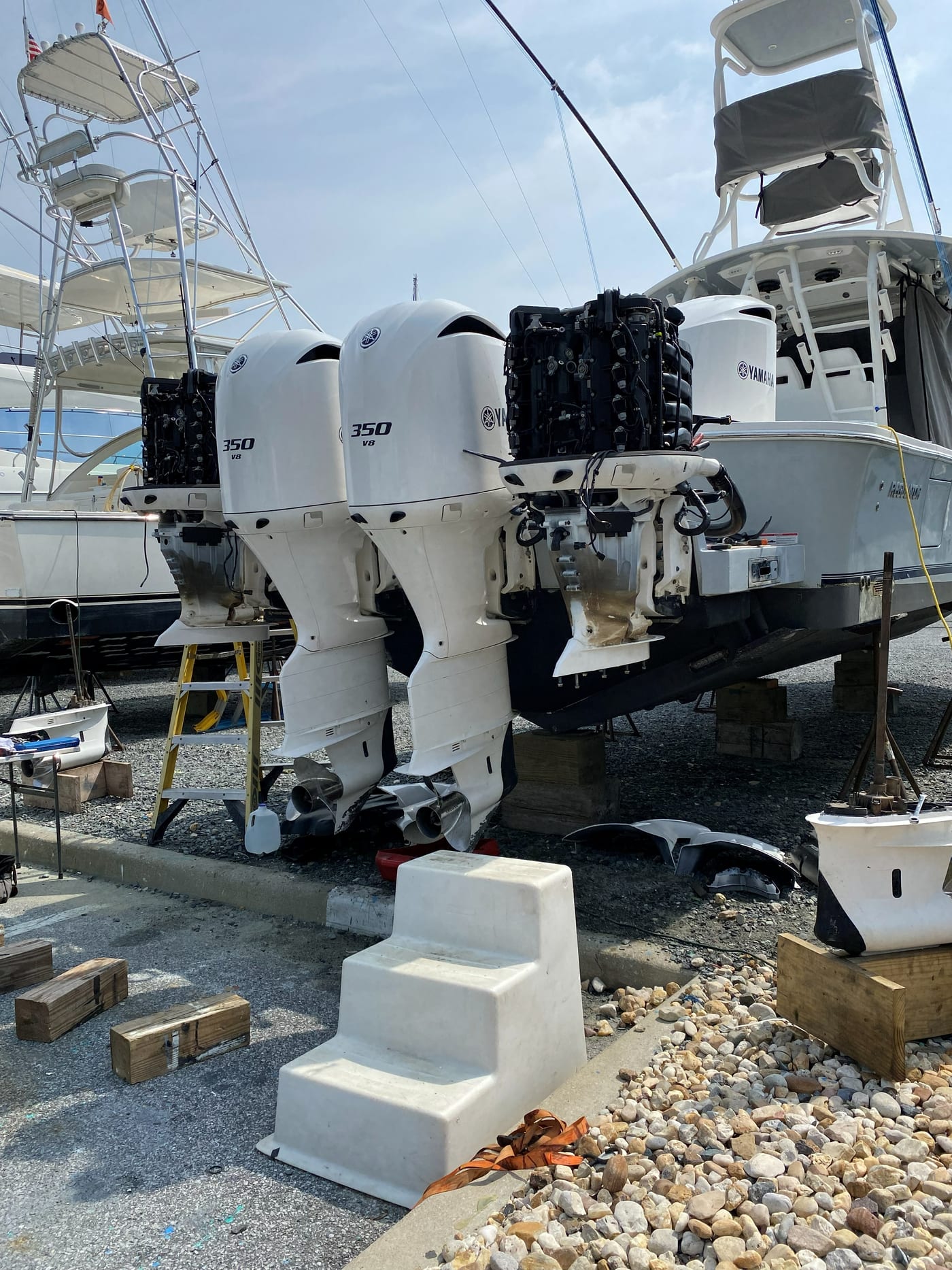
If the gears and bearings are clean, it goes back together with new seals and gaskets and is pressure and vacuum tested to prove it seals. If they are rusted or marked, we show you the parts and price both the repair and a replacement lower unit, so you decide with the facts in front of you. We do not guess at that over the phone, and we do not quote a repair we have not looked at.
What you can do yourself
- If you have ever cleared line off the prop at the dock, tell us when you book. It means line has been there.
- Look at the gear oil when it is changed. Dark and clear is healthy. Pale, thick and opaque means water.
- If the boat has hit bottom hard, say so. A real grounding can distort a housing or crack a case, and that is a different job.
Why we would rather see it in the fall
There is no sensor for any of this, no light on the dash, and no change in how the boat drives until something is badly wrong. The gear oil change and the look behind the prop are part of every winterization and every 100-hour service we do. A problem found in November waits on a bench with the parts on the shelf; the same problem found in July costs a summer weekend.