
Service, explained
What our outboard winterization includes
- Every autumn, before the first freeze
- A full 100-hour service included
- Run on premix until it fogs



Most shops fog through the intake and call it done. Ours is closer to a full 100-hour service with the winter work on top, which is why it takes the hours it takes. Here is the whole thing, and the reason behind each step.
Prices are by engine size and they are published, along with wrap, blocking and storage, on the winterization and storage page. This page is about what actually happens to the engine.
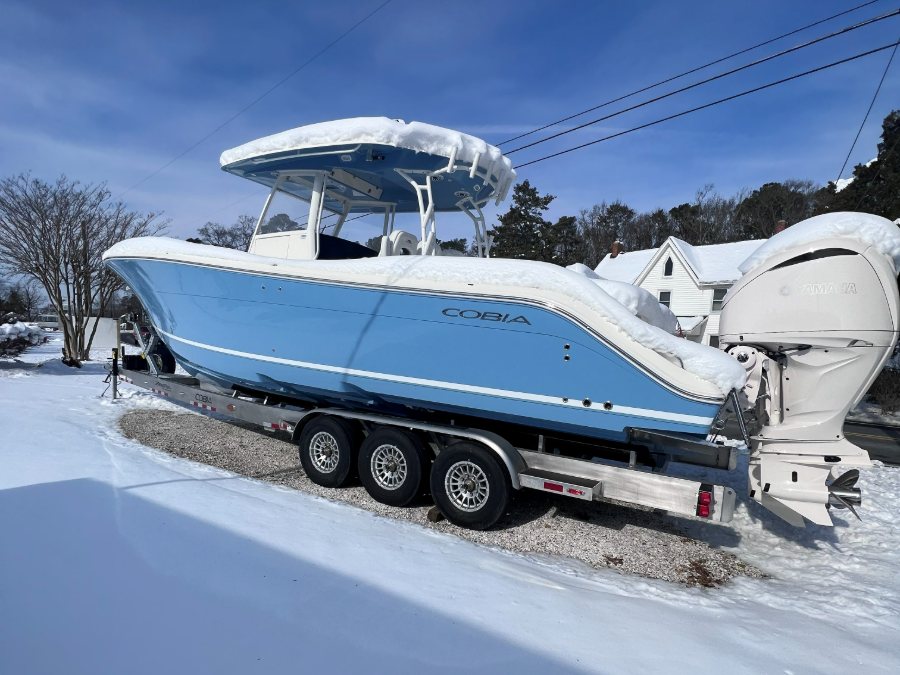
Engine, fluids and fuel system
- Engine oil, oil filter and gear oil changed — the full 100-hour service, not a drain and a top-up. Gear oil is also how we catch a weeping prop-shaft seal before it becomes a lower unit, and the winter is the right time to find one.
- New fuel/water separator, left dry for the winter. Nothing sitting in it to go stale, and nothing in it to freeze.
- The fuel line disconnected at the primary filter cup and the VST drained. The vapor separator tank is where fuel waits before the injectors, and it is the last place you want a winter's worth of ethanol blend sitting.
- Premix pumped in and the engine run on it until it fogs. Non-ethanol fuel mixed with Yamaha EFI fogging oil, filling the VST, and the engine run off our line rather than the boat's tank. Running the engine on premix means the fogging oil goes wherever the fuel goes — the tank, the rails, the injectors — instead of only what a spray can reach through the intake.
- Engine shut down, our line disconnected, the boat's own pickup line reinstalled and zip-tied, so nothing is left loose for the spring.
Corrosion and lubrication
- The engine sprayed with CRC 6-56 corrosion inhibitor. Cowling back on, engine trimmed up and set on its locks.
- Every accessible zerk fitting greased — steering, tilt tube, linkages. Grease displaces water, and salt air spends the winter looking for the places it has not been.
- Prop pulled, checked for fishing line round the shaft, shaft greased, refitted with a new cotter pin. Line behind a prop is how a gear case seal starts leaking, and you cannot see it with the prop on. This is the one step every season turns up something on.
The boat side
- Drain plug removed and zip-tied to the right rear lifting eye, so no water can sit and freeze in the bilge — and so the plug is somewhere you will find it in April.
- Keys zip-tied to the steering wheel.
- Battery tops cleaned of dust and the batteries disconnected, so they are not discharging quietly all winter and flat when you want them.
Why it is done this way
Two things separate this from a fog-and-drain. Running the engine off premix through the VST means the fogging oil coats everything the fuel touches, not just the intake tract. And a dry separator with a drained tank means no stale ethanol fuel anywhere in the system for five months. Our season is short and boats here sit far more than they run, so nearly every spring problem we see is a lay-up problem rather than a running one.
It is the same reasoning behind the rest of what we do — the water pump service that replaces the seals while the unit is apart, the VST service that keeps a fuel pump cool. Do the part nobody sees, and the boat is ready when you are. Keeping you on the water is the whole job.
Yamaha Marine Service Pro Elite dealer in Selbyville — five certified technicians, one of them a Master Tech. We collect at the ramp across Delmarva. 💬 Ask the assistant or call (302) 436-1737.