

Yamaha service
The Yamaha maintenance schedule, explained
What actually happens to your outboard at every interval, and what goes wrong when one gets skipped. Written by the technicians who do the work, not copied off a brochure.
Inspected from 5 years · or 500 hours
Yamaha timing belt service
- Inspected from five years
- Belt, idler pulleys and tensioners
- Most Yamahas are interference engines



We start inspecting at five years. Most Yamaha outboards are interference engines, so this is not a belt that strands you — it is a belt that ends an engine. It is not a cheap service. It is dramatically cheaper than the alternative.
What an interference engine means
In an interference engine the valves and the pistons pass through the same space, just never at the same moment. The timing belt is what keeps those moments apart. When the belt goes, the camshaft stops and the crankshaft does not, the valves stop getting out of the way, and the pistons find them. That is the end of the engine, not the end of the belt.
It is worth saying plainly because a timing belt quote looks expensive next to an oil change and the risk is invisible. A belt that is about to go looks much like a belt that is fine, from the outside.
The tell
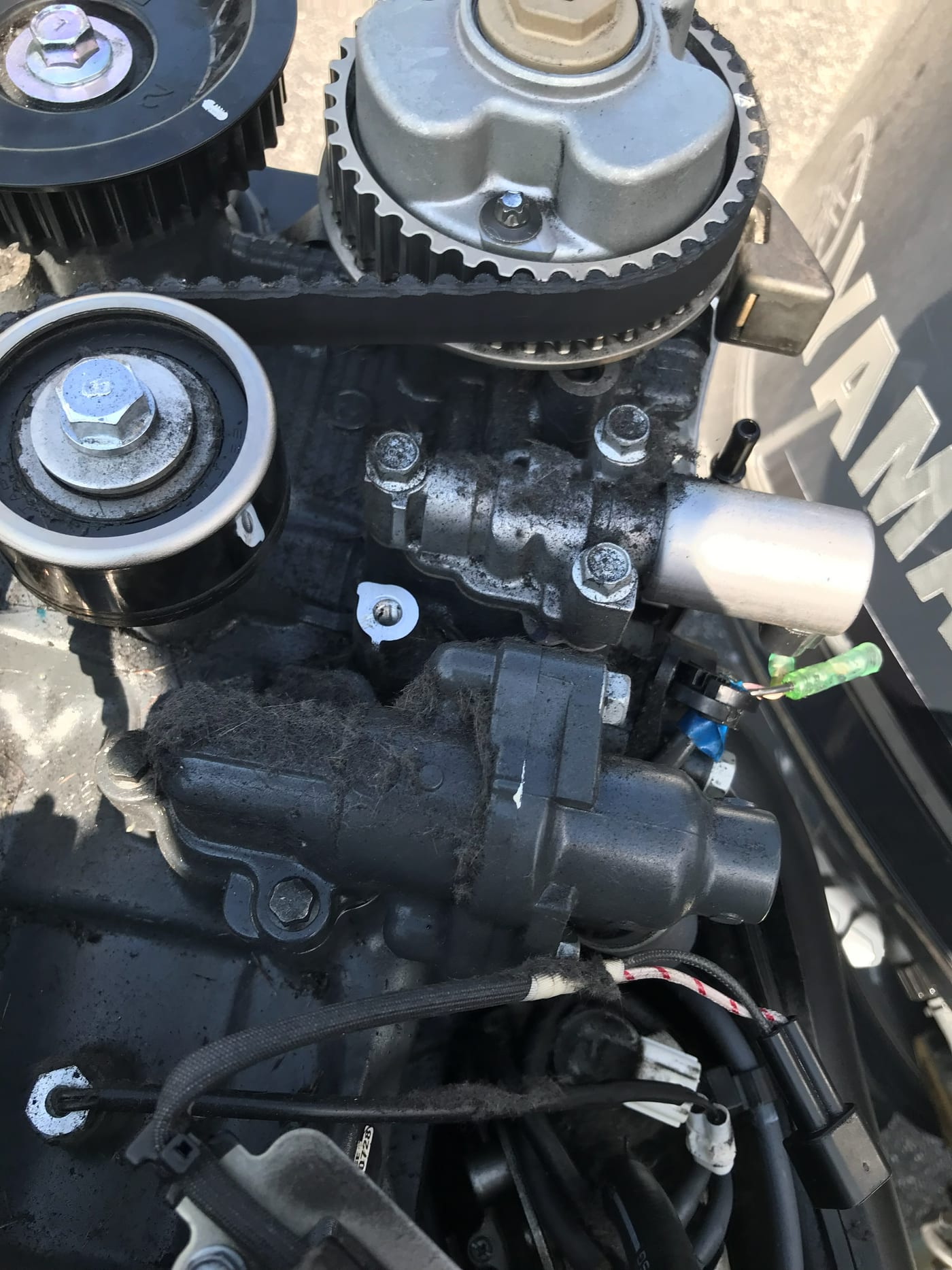
Fine black dust under the cowling. That is belt material, and it means the belt is shedding. If you lift your cowling in the spring and find a dark powder on the shelf or the block, that is the engine telling you it is ready. Bring it in. It is not something to watch for another season. What black dust under the cowling means →
What we replace
- The belt.
- The idler pulleys.
- The tensioners.
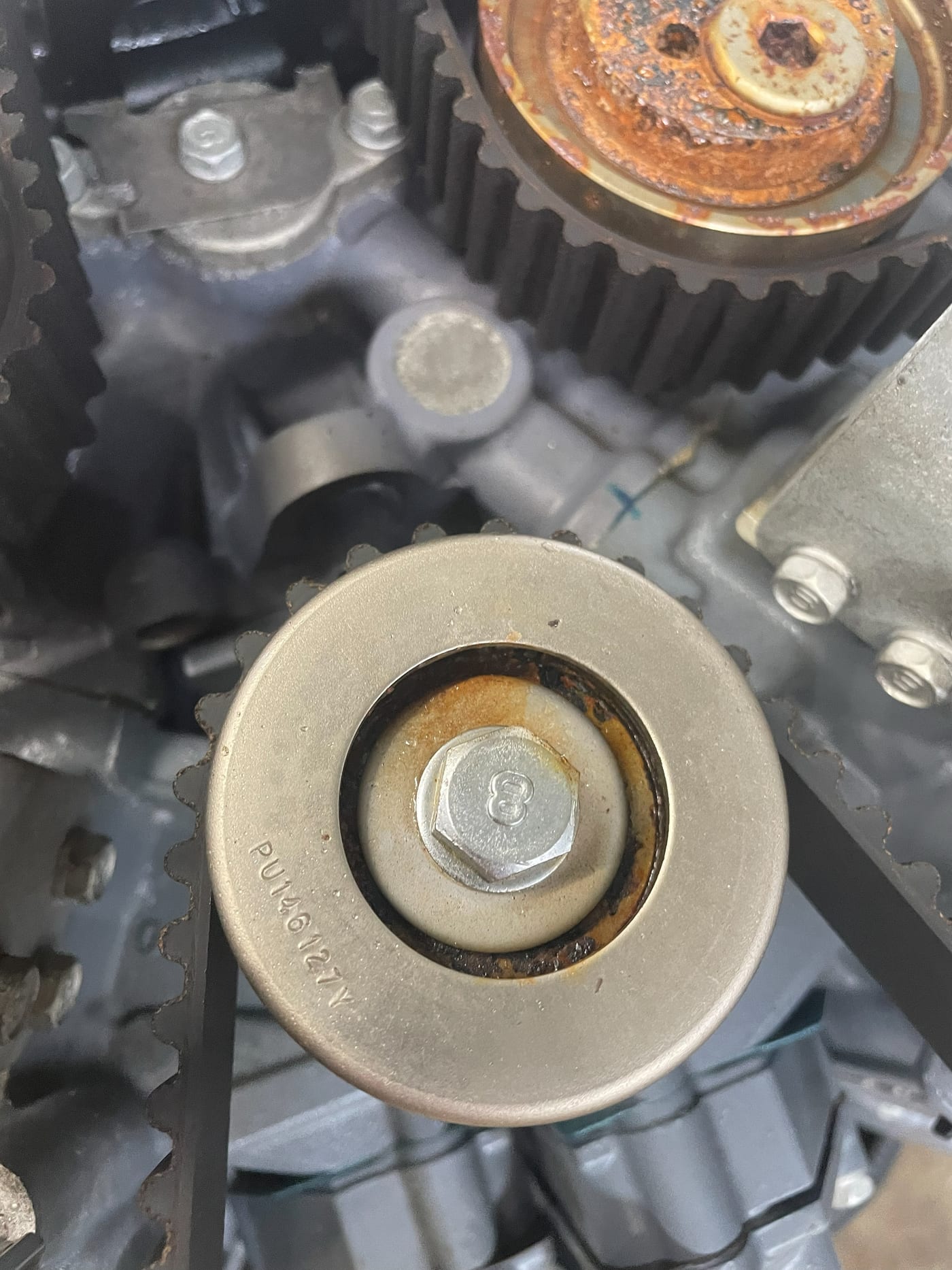
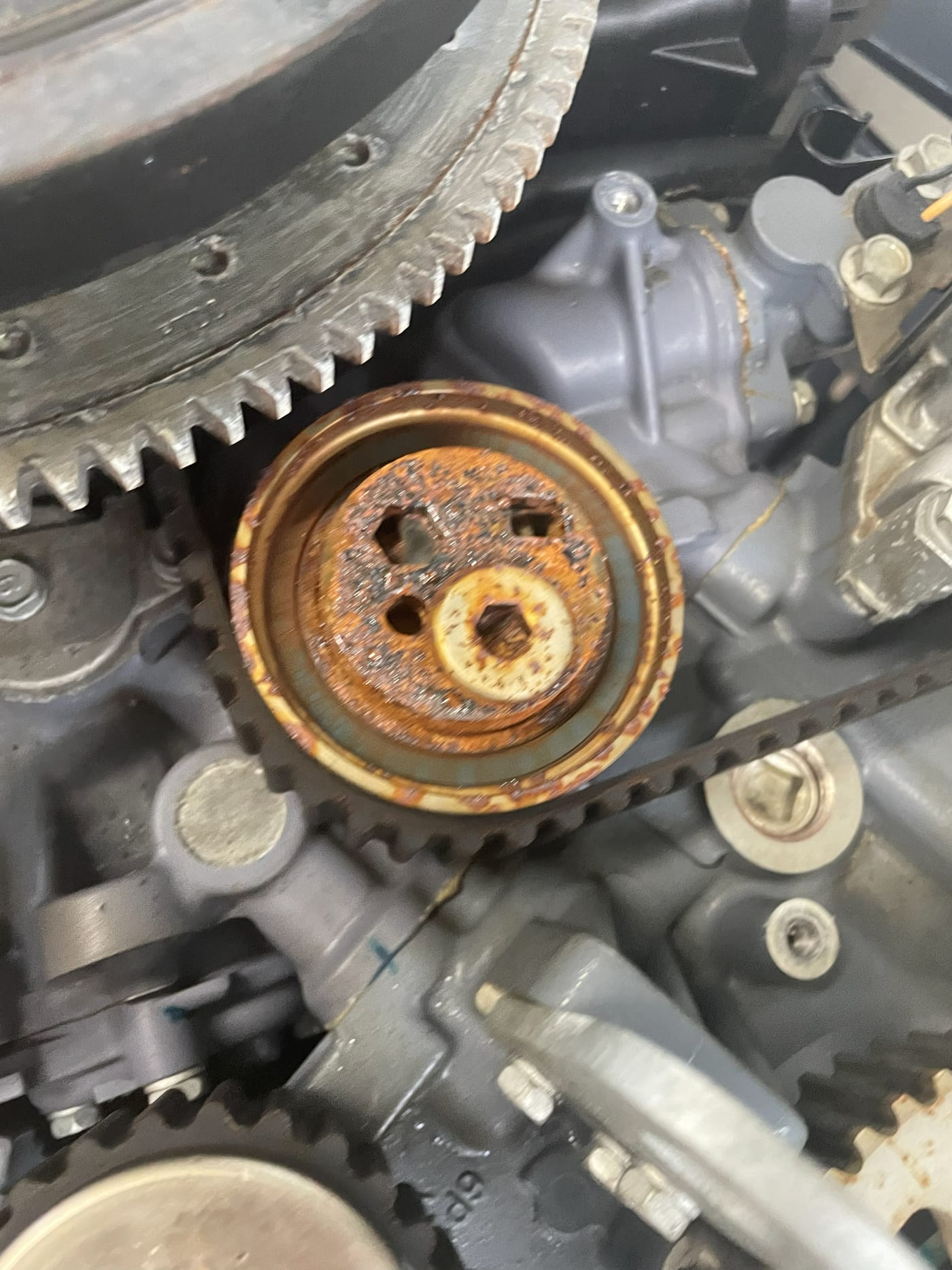
Together, always. Idler pulleys and tensioners are bearing-driven with grease sealed inside them, and grease breaks down with age the same way everything else does. If a tensioner or an idler pulley seizes, it snaps the belt — and you are back to valves meeting pistons, this time with a new belt on the engine. Replacing a belt over tired bearings buys you the part and none of the protection.
Five years on this coast
Our season is short and most boats here sit more than they run, which misleads people into thinking a belt with low hours is a young belt. It is not. Rubber ages on the calendar, and it ages faster through the temperature swing of a Delmarva winter into a hot August than it would somewhere the engine stays at one temperature. Hours are not the measure on this one. Years are.
How it's quoted
We quote it the same day you ask, based on your engine, and the service writer confirms the number with you before any work begins. When it is close, we will tell you it is close rather than sell you a belt you do not need yet — and we will tell you what we saw when we looked.
Yamaha Marine Service Pro Elite dealer in Selbyville — five certified technicians, one of them a Master Tech. 💬 Ask the assistant or call (302) 436-1737.
The rest of the schedule
We are in Selbyville, Delaware, and we cover the Delmarva Peninsula — Ocean City and Ocean Pines in Maryland, Fenwick Island, Bethany Beach, Ocean View, Millsboro, Rehoboth and Lewes in Delaware. Keeping you on the water is the whole job.
From the shop floor
Zak Smith, Yamaha Master Technician, on this.