
Service & engines
The afternoon no-start, and why Yamaha fuel pumps fail early here
It ran all morning, it will not restart after lunch, and an hour later it starts like nothing happened. That pattern has a cause.

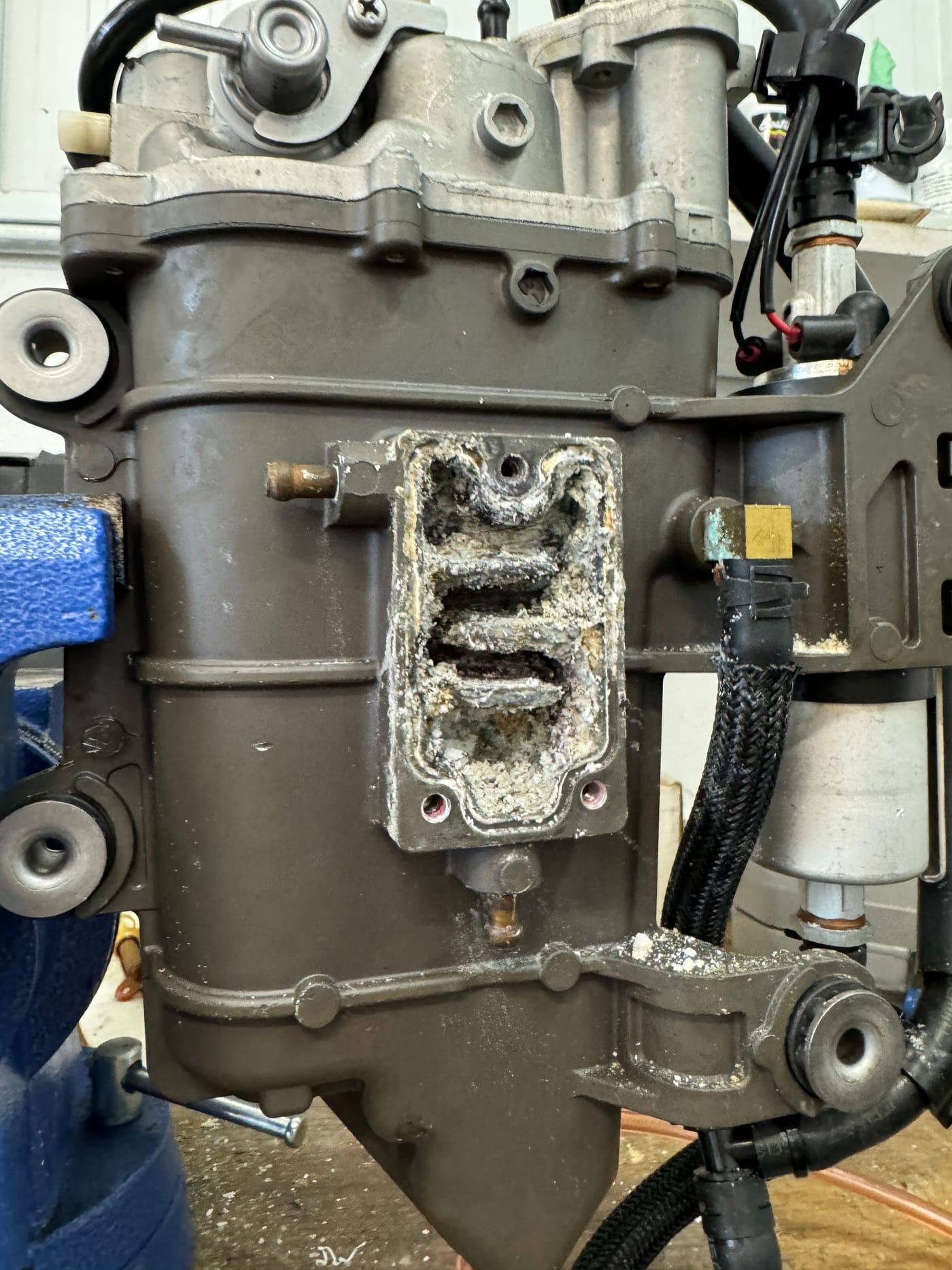
The call usually goes the same way. The boat ran all morning. They shut it down to fish, and when it was time to move it cranked and would not catch. An hour later, with everything cooled down, it started like nothing had happened.
That pattern has a cause, and it is worth knowing before it happens offshore.
Heat is the tell
Something failing mechanically does not care what temperature it is. The pump does. The symptoms tend to arrive in roughly this order, and every one of them is worse hot than cold:
- Longer cranking when the engine is hot. Two seconds in the morning, five or six after a run. Most owners put it down to the boat being the boat.
- A stumble on the throttle. Coming onto plane, or asking for more at cruise, it hesitates before it goes.
- A surge at steady cruise. The note rises and falls with the throttle untouched.
- It will not restart in the afternoon. The classic one.
- A fault code — sometimes, and often after the symptoms rather than before them.
Why they fail early here
The high-pressure pump lives inside the vapor separator tank, under the intake manifold. It is cooled by the fuel it sits in, and that fuel is cooled by a water passage running through a fuel cooler on the back of the tank. So the chain is: water cools the passage, the passage cools the fuel, the fuel cools the pump.
We run in shallow, sandy bays, and sand moves through everything on an engine that takes raw water. That passage is narrow and it sits at the back of a tank nobody ever looks at. It silts up and corrodes quietly, the fuel runs hot, and a pump that should last many seasons is worked to death in two or three.
Nothing on the gauges says any of this is happening. That is why, after two seasons of watching those pumps fail, we put the tank on a schedule instead of waiting for the symptoms.
It is not always the pump
A stumble can just as easily be a clogged filter, water in the fuel, a fouled injector, a failing low-pressure pump or an ignition fault, and some of those cost a fraction of a pump. Anyone who tells you which one it is over the phone is guessing.
So we test fuel pressure and read the engine's own stored history. Yamaha's diagnostics keep a record of what the engine has been doing, and between a pressure reading and that record there is usually a clear answer rather than an opinion.
What the fix looks like
If the tank is the cause, the intake manifold and the tank come off, both filters and the lid gasket are replaced, and the fuel cooler is stripped and cleaned out properly — not flushed and hoped over. The pump runs cool again.
If the pump has already gone, it is replaced with the tank on the bench, and the cooler still gets cleaned. Fitting a new pump into the conditions that killed the last one is not a repair.
If your engine is doing this
- Keep the boat where you can get home until it has been tested. Fuel pumps do not recover.
- Note when it happens: hot or cold, at what speed, after how long running. It helps the test.
- If a fault code came up on the gauge, write it down or take a photo of it.
The way this ends, if nobody looks, is an afternoon offshore that will not restart. It gives you weeks of warning first. The point of writing it down is so you recognize the warning.